When does ADOT switch the I-17 flex lanes?
When does ADOT switch the I-17 flex lanes?
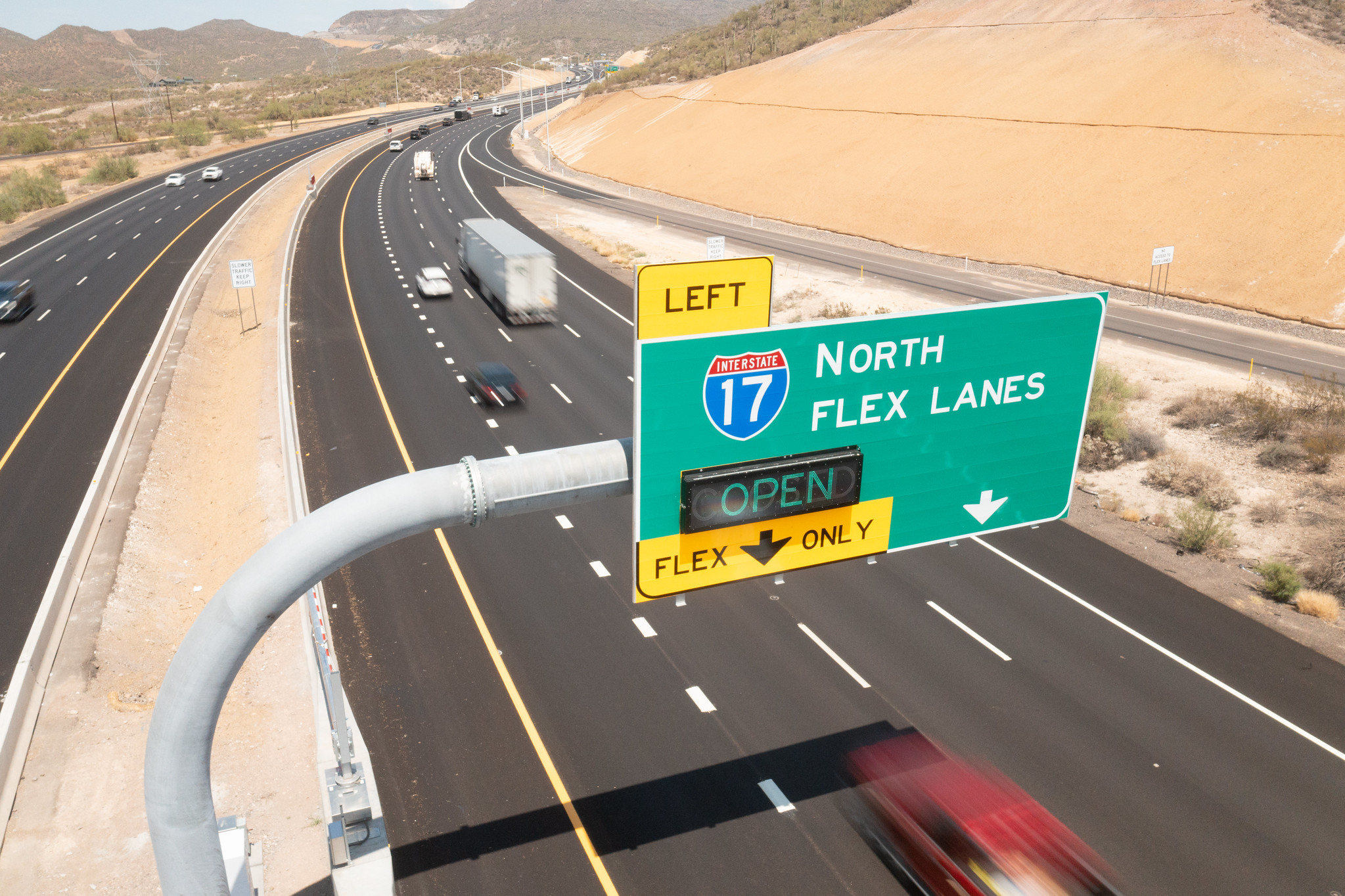
If you’ve traveled on Interstate 17 between Phoenix and northern Arizona in the past year, you’ve either driven through or seen the first ever flex lanes in Arizona.
The reversible lanes were built as part of the I-17 Improvement Project between Anthem Way and Sunset Point. The corridor is one of the most traveled in the state with over 1 million vehicles traveling through it each year.
The project, which was fully completed in December 2025, added four new lanes to I-17 in total, including 15 miles of an additional lane in each direction and 8 miles of two flex lanes, which are open northbound most of the week, and southbound on Sundays (and Mondays during holiday weekends).
The flex lanes can also change directions if needed due to unplanned closures, such as a severe crash that is anticipated to fully block the mainline for hours.
Before the flex lanes, such a crash on I-17 southbound on a Wednesday could mean cars spending hours waiting at a standstill or taking a lengthy detour. Now, the ability to switch the flex lanes allows traffic to continue toward Phoenix with less delays.
But changing the direction of the flex lanes is not as simple as just flipping a switch. The flex-lane system must be physically inspected each time a change in direction occurs and can take an hour to ensure safety for travelers.
The process to safely switch the direction of the flex lanes has many steps and takes time to complete. Once all of the steps are completed, the process of opening the other direction begins. Safety is always the top priority.
“It takes a lot of coordination and it takes a lot of people to make the flex lanes happen,” said Cordes Junction Maintenance Supervisor Jon Edwards, who has worked at ADOT for 21 years.
Edwards is often the person responsible for arriving on scene when the flex lanes change direction. He visually confirms that the lanes are clear and makes sure that everything is working properly. 
To begin the process, he calls dispatchers at ADOT’s Traffic Operations Center (TOC) in Phoenix. The dispatchers confirm on camera that traffic is completely cleared. From the TOC, they remotely update the signs to display “CLOSED,” then remotely close the outer and inner gates and Vehicle Arresting Barriers (VAB) on both sides.
A VAB is a net-like gate that can safely stop a vehicle from entering the flex lanes in the wrong direction. Drivers would have to crash through 15 gates prior to reaching the net, making it the last line of defense that, fortunately, has never been needed.
Edwards then drives the entire 8-mile stretch through the flex lanes to make sure there are no trapped vehicles or debris inside. Once it’s verified that the lanes are clear, he instructs dispatchers to open the VAB and gates, and update the signs to show “OPEN” and allow traffic to flow in the new direction.
The flex lanes facilitate smoother travel in the direction of the heaviest traffic and can also be used to redirect traffic during closures caused by crashes or other incidents.
Dispatchers and maintenance crews determine whether using the flex lanes as a detour is the best option depending on the location, expected duration of the closure and the amount of traffic currently in the flex lanes.
The addition of the four lanes has improved traffic flow and safety. The total number of crashes recorded in the 8-mile flex lanes corridor in 2025, the year the flex lanes opened for travel, was 143, lower than crash totals in 2022 (162), 2023 (166) and 2024 (218).
“I-17 before the flex lanes was very busy with lots of incidents," Edwards said. “Now that we have the flex lanes, we’re able to keep traffic moving."