Transportation Board OKs update to five-year construction program
Transportation Board OKs update to five-year construction program
ADOT’s 2027-2031 plan emphasizes pavement and bridge investments
PHOENIX – The State Transportation Board has approved the 2027-2031 Five-Year Transportation Facilities Construction Program, which emphasizes pavement and bridge improvements and expanding several key highways.
Approved at the board’s meeting Friday, June 19, in Nogales, the $11.3 billion 2027-2031 Five-Year Transportation Facilities Program is available for review at azdot.gov/FiveYearProgram.
For Greater Arizona, which encompasses areas beyond Maricopa and Pima counties, the construction program emphasizes improving highway pavement and bridge infrastructure. These projects will improve highway safety, efficiency and functionality, such as intersection improvements, updates to ports of entry and rest areas, smart technologies and new signals, signs and shoulders.
The five-year program features several projects that increase the capacity or expansion of highways throughout Greater Arizona, including:
- Widening SR 260 east of Payson, known as the Lion Springs segment
- Widening US 93 at Big Jim Wash between Wickenburg and Wikieup
- Constructing the James Ranch Road between SR 80 and and the new Douglas Land Port of Entry
- Improving I-17 from Dugas Road at milepost 269 to milepost 275
In Maricopa County, the five-year program lists projects planned in conjunction with the Maricopa Association of Governments (MAG), including:
- Beginning construction of the center segment of SR 30, which runs from Loop 303 to Loop 202 (South Mountain Freeway)
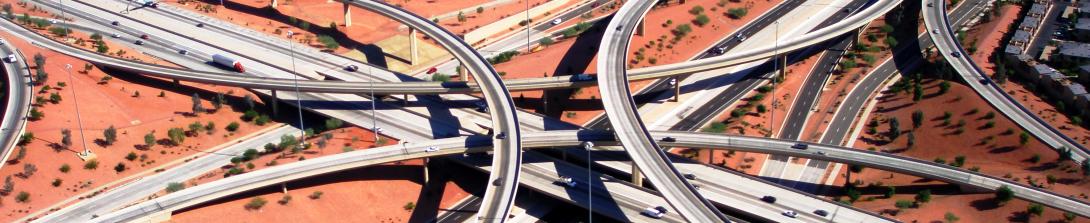
- Widening and making other improvements to the Mini-Stack Interchange east of downtown Phoenix at I-10/Loop 202/SR 51
- Widening US 60 between Ellsworth and Meridian roads
In Pima County, the five-year program lists projects planned in conjunction with the Pima Association of Governments (PAG), including:
- Widening I-10 from Alvernon Way to Valencia Road and building ramps for the connection of future SR 210 to I-10
- Improving the I-10 interchanges at Park Avenue and Sixth Avenue
Both the Maricopa and Pima county regions have dedicated, voter-approved sales taxes for transportation that fund projects. In Maricopa County, funding comes from Proposition 479, a half-cent sales tax for regional transportation projects that voters approved in 2024. In Pima County, funding comes from RTA Next, a ballot initiative voters approved in March to extend an existing half-cent sales tax for regional transportation projects.
The five-year program also includes $186.1 million for the Airport Capital Improvement Program, which provides funding in conjunction with the Federal Aviation Administration for projects to design and construct safety, security, and capacity enhancements, prepare various plans and studies, and fund improvements at the Grand Canyon Airport, which ADOT operates.
To more easily locate projects, ADOT has developed a searchable project dashboard that allows the public to look for projects by highway number, project name or other identifying features. The database is available at azdot.gov/5yeardashboard.
Federal and state sources provide the overall statewide Five-Year Transportation Facilities Construction Program funding. State transportation funds are generated by users of transportation services in Arizona, primarily through gasoline and diesel fuel taxes, the Arizona vehicle license tax and various aviation taxes. ADOT develops the five-year program by working closely with local governments, regional transportation planning organizations and tribal communities to prioritize projects that are ready to build or design.