High School STEM Programs
High School STEM Programs
"Exploring STEM. Building futures"
The Workforce Development Service program supports STEM education initiatives designed to introduce high school students and educators to careers in transportation, engineering and infrastructure. These programs help build awareness of transportation careers while encouraging students to explore opportunities in science, technology, engineering and mathematics.
Note: Program availability is reliant on availability of funding.
STEM Bridge Builder Program
In partnership with American Association of State Highway and Transportation Officials (AASHTO)
The AASHTO STEM Outreach Solutions-educational outreach program is designed for use in Science, Technology, Engineering, and Math (STEM) classes for Arizona high school students to learn about the world of transportation and civil engineering, inspiring them to consider careers in those fields.
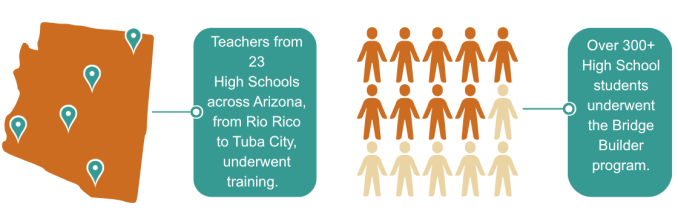
Teachers undergo a two-day, in-person, training and are then supplied with the Bridge Builder Module, containing equipment, software and supplies needed to perform the hands-on activities with their students.
National Summer Transportation Institute (NSTI) Program
In partnership with ASU Ira A. Fulton Schools of Engineering
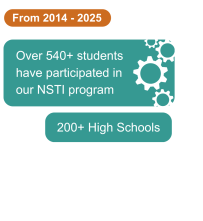 The National Summer Transportation Institute Program (NSTI), allows Junior/Senior High School students to learn how engineers– from aerospace to software–maintain our systems of transportation in AZ. Students stay at the Arizona State University (ASU) campus for five nights and five days where they:
- Meet with professional engineers and faculty, tour campus labs related to aviation, structures and materials.
- Engage in engineering lab activities to better understand the transportation industry.
- Mentored by undergrad engineering students.
- Tour local locations and traffic systems not normally accessible to the general public (Traffic management centers, airports and active construction sites).