What is diamond grinding?
What is diamond grinding?
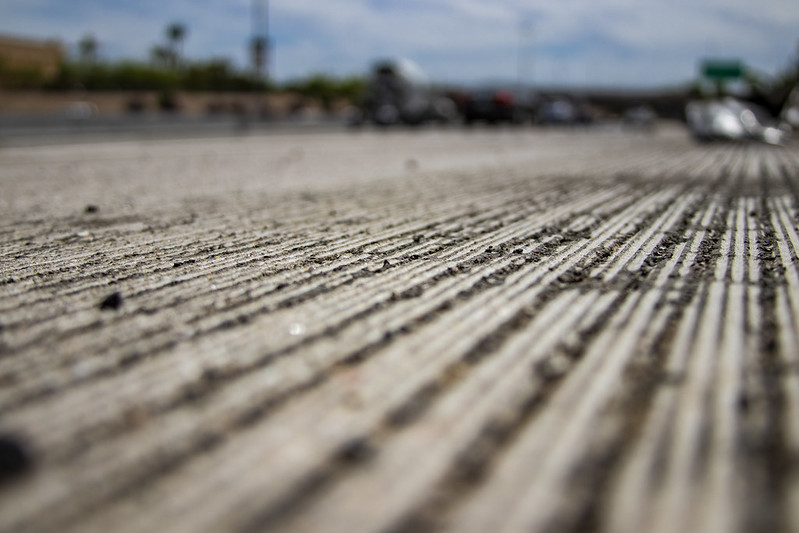
You may have heard that diamond grinding is currently being used on the SR 51, I-10 to Shea Blvd pavement project and the pavement improvement projects on the Loop 101 Agua Fria and Pima freeways. But what does that actually mean?
Diamond grinding is a pavement rehabilitation process that includes removing the old, worn, top layer of rubberized asphalt on a freeway and using machines with closely-spaced diamond-tipped blades to carve small grooves in the concrete pavement underneath. The treatment provides a consistent and smooth pavement surface and helps absorb roadway noise.
Rubberized asphalt is very smooth and quiet when first applied, but wears out over an anticipated service life of 10-15 years. Back in 2019, there were many miles of asphalt on freeways in Maricopa County that needed to be replaced, which would be very expensive, or we needed to find another solution. That’s where diamond grinding came into play.
A diamond grinding treatment on concrete pavement can last more than 30 years before another treatment is needed. That results in less ongoing maintenance, making the diamond grinding program more sustainable and cost-effective and saving millions of dollars that can be used toward other projects.
The Maricopa Association of Governments (MAG) partnered with us for a three-year diamond grinding pilot program in 2020. The pilot program found that diamond grinding outperformed rubberized asphalt in almost every criteria, and in 2023 the program was extended for use on all feasible projects in Maricopa County.
Today, nearly half of Phoenix-area highways with concrete bases have been treated with diamond grinding, including I-17 in the North Valley, US 60 in the East Valley and Loop 202 in Chandler, with more expected within the next 10 years.
“We’ll continue to work with MAG on scheduling future diamond grinding projects as funding becomes available,” ADOT Central District Administrator Randy Everett said. “Locations on our near-term list include the stretch of I-10 between the Split and Stack interchanges near downtown Phoenix and the Loop 202 Red Mountain Freeway between SR 51 and Priest Drive in Tempe."
Learn more:
Video: Kitty explains diamond grinding.
Video: What is diamond grinding?